 Panacea Bio Chem · Molecular Record
Panacea Bio Chem · Molecular Record
Panacea Bio Chem · Molecular Record
Prime editing can rewrite a chosen stretch of DNA without cutting both strands. At its heart is one fused protein: a Cas9 nickase joined to a reverse transcriptase — nCas9-RT. Building it was the breakthrough. Getting it to a patient intact is the next one.

Standard CRISPR-Cas9 cuts both strands of DNA and lets the cell repair the break — powerful, but blunt. Prime editing is the more surgical successor, and its engine is a fusion protein:
Together they perform a genuine "search-and-replace" on the genome — inserting, deleting, or swapping short sequences without the collateral damage of a full cut.
An nCas9-RT editor is a large, fragile assembly — protein fused to protein, partnered with RNA. That fragility is the real barrier to turning prime editing into medicine:
A perfect edit is worthless if the machine that makes it falls apart in a vial. Stabilising the editor is not a side problem — it is the path to the clinic.
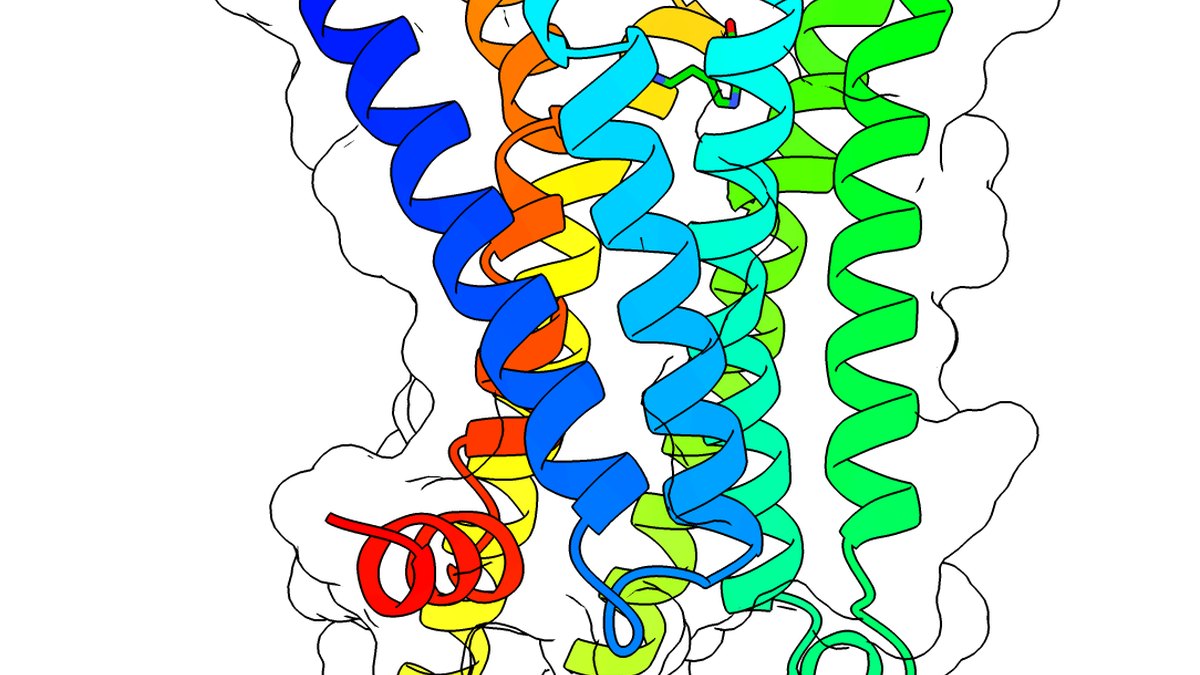
Keeping large, fragile biological machinery intact through drying, storage and reconstitution is precisely the ground Panacea Bio Chem works on. Its ongoing, exploratory work asks whether the same proprietary methods that preserve designed peptides can stabilise editing machinery:
That preservation runs cold end to end: the lyo process finishes at −3 to −5 °C, sublimation ends at −8 to −10 °C and desorption at −3 to −5 °C, with no +40 to +60 °C overheat — the discipline that helps preserve the binding affinity and bioavailability of a fragile cargo.
The world is learning to write the genome. The quieter question — how to get the writing machine to the patient still working — is the direction Panacea's research points.
nCas9-RT made a new class of edits possible. Whether those edits become medicines depends less on the biology of the cut and more on the decisive engineering of delivery: keeping a fragile editor alive from the lab bench to the point of care.
What is nCas9-RT in plain terms?
The engine of prime editing: a Cas9 nickase (nCas9) fused to a reverse transcriptase (RT). The nickase nicks one DNA strand; the RT writes new DNA from an RNA template. Guided by a pegRNA, the complex performs a genuine search-and-replace on the genome — no double-strand break.
How is it different from standard CRISPR-Cas9?
Standard CRISPR cuts both strands and lets the cell repair the break. Prime editing nicks one strand and writes the edit in directly from the pegRNA, so there is no double-strand break to repair badly — more surgical for short insertions, deletions and swaps.
What is a pegRNA?
A prime editing guide RNA. It both guides the complex to the target and carries the sequence of the edit to be written in — the part that turns a cutter into a search-and-replace tool.
Why is delivery the hard part?
The editor is a large, fragile ribonucleoprotein. It loses activity fast in solution, freeze-drying risks denaturing the protein and shearing the RNA, and oxidation degrades key residues. Keeping the machine intact from bench to point of use is the real barrier.
Is nCas9-RT a medicine?
No. It is a laboratory tool in an active research field. This page is a scientific description — nothing here is medical advice.
Recent developments in the field — refreshed 2026-09-30 by Panacea Bio Chem.
The Panacea Technology Universe
Proprietary Panacea Bio Chem Ltd technologies, invented by Bogdan Dicoias — what each one does, and why it leads its class.
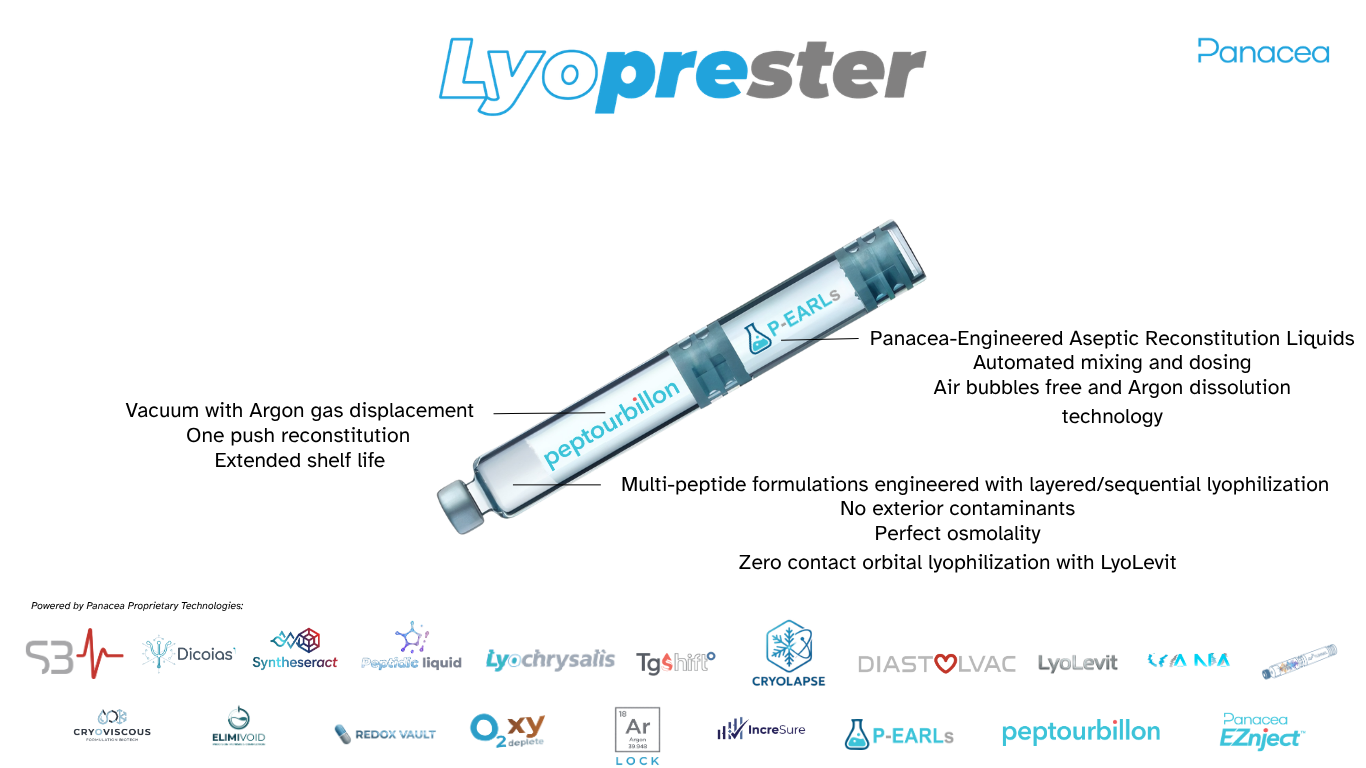
 Lyoprester®The only dual-chamber cartridge that is autoreconstitution-enabled, vacuum-sealed and argon-fillback.lyoprester.com ↗
 P-EARLs™Panacea-Engineered Aseptic Reconstitution Liquid(s) — each tuned to the peptide it wakes.p-earls.com ↗
 Peptourbillon™The layered peptide formulation architecture — single- or multi-layer, never a blend.peptourbillon.com ↗
 RF Tunnel™The RF-formed central channel through the cake.rftunnel.com ↗
 TgShift™Raises the cake’s glass-transition temperature with RF — instead of chilling below it.tgshift.com ↗
 Cryolapse™Cryogenic pressure collapse under S3Pulse™ control — vapour redistributed through the whole cake, not its surface, impeding crust formation.cryolapse.com ↗
 LyoLevit™The cake levitates and spins in high orbit — driven by ultrasound and RF.lyolevit.com ↗
 Lyochrysalis™The integrated chamber housing the whole drying stack.lyochrysalis.com ↗
 S3Pulse™The control brain for every piece of Panacea hardware.s3pulse.com ↗
 Liquiprester™The single-liquid cartridge engineered so multiple peptide APIs coexist in one shared vehicle.liquiprester.com ↗
 Syntheseract™Continuous-flow peptide synthesis in a special, very fast and economical way.syntheseract.com ↗
 CFSPPS™Continuous-flow solid-phase peptide synthesis, written as its own category.cfspps.com ↗
 OxyDeplete™Degassing plus no-headspace doctrine — the oxygen-starved seal.oxydeplete.com ↗
 ArgonLock™The final inert-atmosphere lock under argon.argonlock.com ↗
 RedoxVault™Separation, not merely suppression — redox isolation in lipid micro-reservoirs.redoxvault.com ↗
 PleniDose™The shared filling gantry — one machine filling both the dual-chamber Lyoprester and the liquid Liquiprester.plenidose.com ↗
 IncreSure™The dose-metrology layer — verified API per pen increment.incresure.com ↗
 ElimiVoid™Front-void elimination without touching the metered dose.elimivoid.com ↗
 Cryoviscous™The characterised cold, high-viscosity, low-mobility conditioning state.cryoviscous.com ↗
 Vana Machine™Vacuum Assisted Needle Accessory — vacuum conditioning and plunger-locking for the cartridge.www.vanamachine.com ↗
 EZnject™The disposable auto-injector pen built around the Lyoprester.panaceaeznject.com ↗
 Dicoias ΨThe computed-chemistry advisory — every substance reduced to a vector across physical, electronic and formulation space.dcppsi.com ↗
 SealoPrester™Aseptic Cartridge Closure System — Seal o’ Precision + Sterility.sealoprester.com ↗
 Peptidic LiquidThe peptide formulation in solution — the active plus its buffers, cryoprotectants, lyoprotectants and scaffolders.peptidicliquid.com ↗
 DiastolVAC™Biomimetic diastolic vacuum control — the pneumatic circulatory system of the machine: pumps, valves and sensors as one ensemble.diastolvac.com ↗
 KineticON™Motion Integrity Architecture — the motion-control layer that lets the machine know what happened on every axis move.kineticon.org ↗
The publications indexed in PubMed in the last 30 days for "nCas9-RT" OR "nCas9" already appear in Trending above — the next most recent in the field, refreshed weekly.